


Homes from this era were built for a different lifestyle. Kitchens were small, dark, and strictly separated from dining areas. Staff staircases (often called “back stairs”) consumed valuable square footage that modern families desperately need for pantries or mudrooms.
The challenge is simple: How do you open up these walls to create a modern flow without stripping the house of the period details that make it valuable?
The Solution: Strategic Subtraction
For our recent Project Seven Thirty, a renovation of a 1931 historic home, the breakthrough wasn’t what we added, it was what we removed.
The home featured a redundant back staircase, a common feature in East Side architecture that often serves as a “space eater.” By structurally removing this under-utilized stairwell, we unlocked enough square footage to completely transform the kitchen. This surgical demolition allowed us to install a chef-grade layout and a spacious walk-in pantry, all without expanding the home’s footprint.
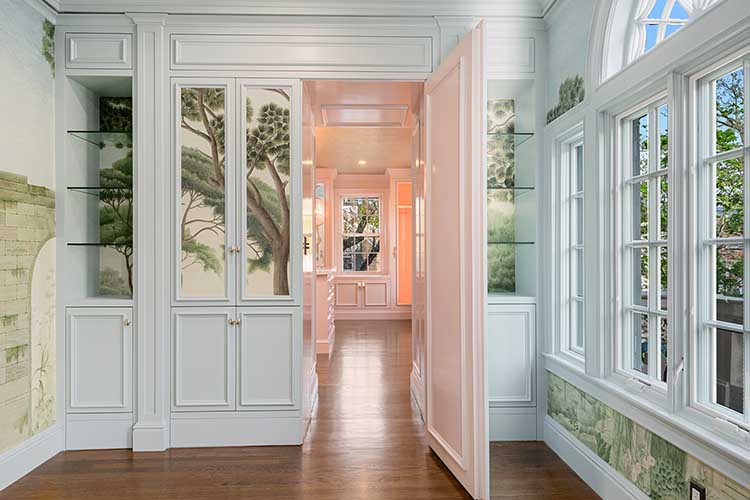
Adding the “Wow” Factor: The Secret Bookcase
Renovating a historic home shouldn’t just be about efficiency; it should be about delight. While reconfiguring the second-level layout, we created a private sitting room that required a transition to the primary suite.
Instead of a standard door, which would have broken the visual rhythm of the room, we designed and built a custom secret bookcase door. When closed, it appears to be a built-in library filled with the client’s collection. When opened, it reveals an expansive new closet and primary bathroom.
This feature serves two purposes:
- Function: It maximizes storage in a tight historic footprint.
- Character: It honors the whimsy and craftsmanship of the 1930s era, proving that “modern” updates doesn’t have to mean “boring.”
Preserving the Envelope
To round out the modernization, we added a new solarium that provides direct garage access—a luxury rarely found in historic city properties. By using period-appropriate materials, the addition feels like it has stood there since 1931.
Explore the gallery of this historic renovation in Providence to see how we turned a cramped 1930s layout into a spacious, light-filled family home.